
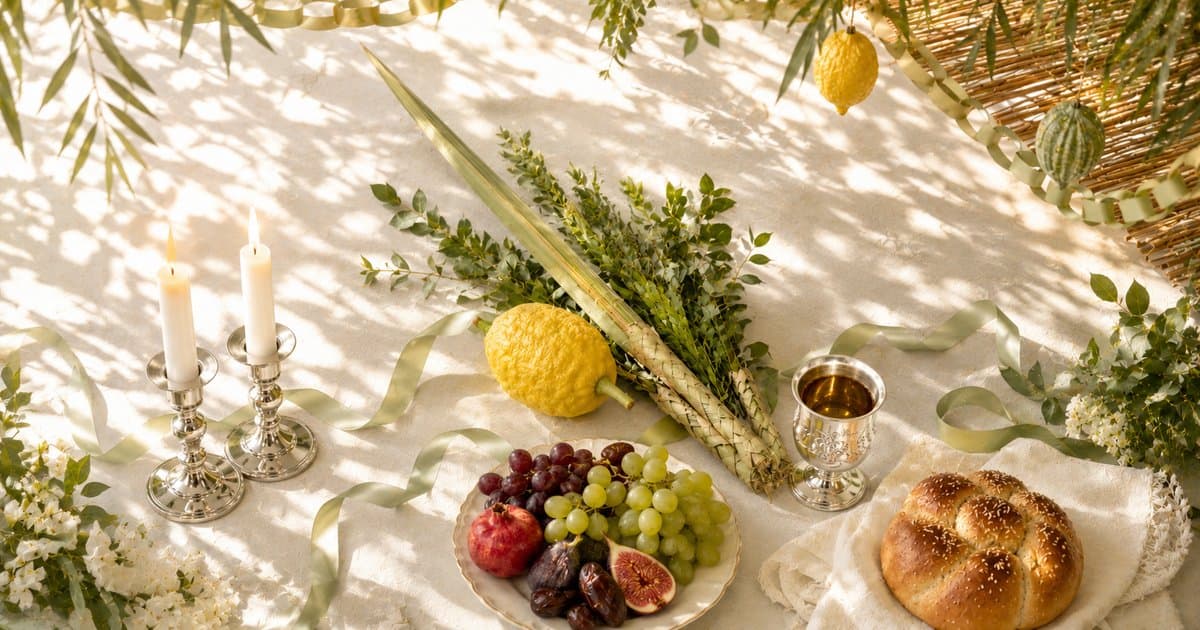
סוכות
Sukkot 2026
Find the exact dates for Sukkot 2026 (5787), including when it begins and ends.
When is Sukkot 2026?
Begins at sunset
Friday, September 25, 2026
Ends at nightfall
Friday, October 2, 2026
Sukkot begins on the 15th of Tishrei, five days after Yom Kippur, typically in September or October. The seven-day festival is followed by Shemini Atzeret and Simchat Torah. Jews eat meals and, when possible, sleep in the sukkah.
Significance
Sukkot celebrates God's protection during the Israelites' desert wanderings and the autumn harvest. Living in the sukkah reminds us of life's fragility and our dependence on God. It is called 'Z'man Simchateinu' (Season of Our Joy), as it is considered the most joyous of the festivals.
Sukkot Prayers
View the complete collection of prayers and blessings for Sukkot in Hebrew and English.
View all 2026 Jewish holidays
Learn more about Sukkot
Frequently Asked Questions About Sukkot
When eating in the sukkah, the blessing 'Leishev BaSukkah' (to dwell in the sukkah) is recited after the blessing over bread or other foods. On the first night, Shehecheyanu is also added. The blessing thanks God for commanding us to dwell in booths.
The blessing 'Al Netilat Lulav' is recited while holding the lulav (palm), hadassim (myrtle), and aravot (willow) in the right hand and the etrog (citron) in the left. After the blessing, the species are brought together and waved in six directions (right, left, forward, up, down, backward).
Hoshanot are prayers recited while circling the bimah (Torah reading platform) with the Four Species during Sukkot morning services. On Hoshana Rabbah (the 7th day), seven circuits are made, and willow branches are beaten on the ground while special prayers are recited.
Full Hallel with a blessing is recited on all seven days of Sukkot, as well as on Shemini Atzeret. This is unique among festivals, as on Passover only half Hallel is said on most days. The Hallel is recited while holding the lulav and etrog.
About Sukkot in 2026
Sukkot (סוכות) dates change each year because Jewish holidays follow the Hebrew lunisolar calendar.
For more about Sukkot including its history, customs, and traditions, see our comprehensive guide. Learn more about Sukkot