
The Continual Fire
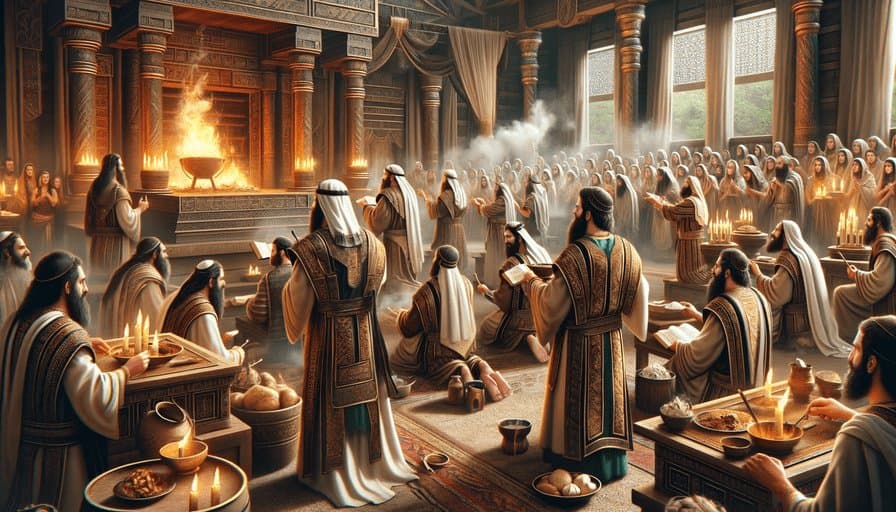
The parsha opens with the olah, the burnt offering that rises entirely to God upon the altar. The Kohen (priest) dresses in linen each morning to lift away the ashes, and a second set of garments carries them to a pure place outside the camp. Above all, the Torah commands that the fire on the altar burn continually and never go out, fed faithfully day after day. This unceasing flame becomes an image of steady devotion, the quiet, constant service that underlies every dramatic moment of worship.
Grain and Its Gift
Next come the laws of the mincha, the meal offering of fine flour and oil. A handful is burned upon the altar, and the remainder is eaten by the kohanim as most holy bread within the sacred precinct. The Torah also describes the special offering that Aharon and each future high priest bring on the day they begin their service, a grain offering given wholly to God rather than eaten. In these gifts the humblest ingredients, flour and oil, become a vehicle for drawing near.
Sin and Guilt
The Torah turns to the chatat and the asham, the offerings that repair a person's relationship with God after wrongdoing or misuse of sacred things. It teaches where each is slaughtered, how its blood is applied, and which portions the priests may eat. Vessels that absorb the offering must be scoured or broken, guarding the holiness of what has touched the altar. Here atonement is not abstract: it is worked out through careful, tangible acts that restore what was damaged.
Thanksgiving and Peace
The shelamim, the peace offering, is shared between the altar, the priests, and the one who brings it, a meal eaten in joy before God. Its most personal form is the todah, the thanksgiving offering brought by someone rescued from danger or illness who wishes to express gratitude. The Torah sets time limits for eating the meat and forbids consuming certain fats and any blood, and it assigns the breast and right thigh to the priests as their portion. Gratitude, here, is meant to be both celebrated and shared.
Seven Days of Consecration
In the closing chapter, Moshe gathers the whole community and carries out God's command to consecrate the priesthood. He dresses Aharon in the garments of the high priest, anoints the Mishkan and its vessels with oil, and offers the bull and rams of the ordination. He places blood upon the ear, thumb, and toe of Aharon and his sons, dedicating their capacity to hear, to act, and to walk in God's service. For seven days they remain at the entrance of the Tent of Meeting, doing all that God has commanded, ready now to begin.