
Family and the Home
Moshe (Moses) opens with laws that protect the vulnerable within the household. A woman captured in war must be treated with dignity and given time to mourn before any marriage, never simply seized. A father may not deprive the true firstborn of his rightful double portion merely because he prefers another wife's son, and parents are given a sobering law for confronting a hopelessly rebellious child. Even the body of an executed criminal must be buried the same day and not left hanging, for every human being is made in God's image.
Looking Out for Others
A cluster of laws teaches responsibility for the people and creatures around us. If you see a neighbor's lost animal or belongings, you may not ignore them but must return them, and if his animal collapses under its load, you must help him lift it. A mother bird is to be sent away before her young are taken, and a new roof must have a railing so that no one falls, for we are responsible for preventing harm. Woven in are the signs of a distinct and holy people: not mixing certain kinds of seed, cloth, or labor, and placing tzitzit, the fringes, on the corners of a garment.
Marriage and Faithfulness
Moshe sets out laws that guard the bonds of marriage and the dignity of intimacy. He addresses the husband who falsely slanders his bride, the gravity of betrayal, and the protection owed to a woman who is wronged, drawing clear lines around faithfulness and consent. He then describes who may enter fully into the assembly of Israel, including the way former enemies and outsiders may in time be welcomed. These laws treat the family and the community as sacred trusts, not to be broken lightly.
Holiness in the Camp
Turning to the life of the community, Moshe commands that the camp be kept pure and dignified, for God moves within it. A slave who escapes a cruel master is not to be handed back but given refuge, and Israelites may not charge one another interest on loans, though they may lend at interest to outsiders. Vows made to God must be paid without delay, and a hired worker passing through a neighbor's field or vineyard may eat his fill on the spot but not carry any away. Holiness, once again, shows itself in honesty, generosity, and everyday decency.
Justice and Compassion
A long series of laws protects the poor and the powerless. A creditor may not seize the millstone a family needs to make bread or enter a home to grab a pledge, and a poor man's garment taken as security must be returned by nightfall so he can sleep in it. Wages must be paid the same day, before the sun sets, and each person is to be punished only for his own sin, never for another's. Moshe commands leaving the forgotten sheaf, the fallen grapes, and the corners of the field for the stranger, the orphan, and the widow, so that the most vulnerable always have a share.
Honest Measures and Amalek
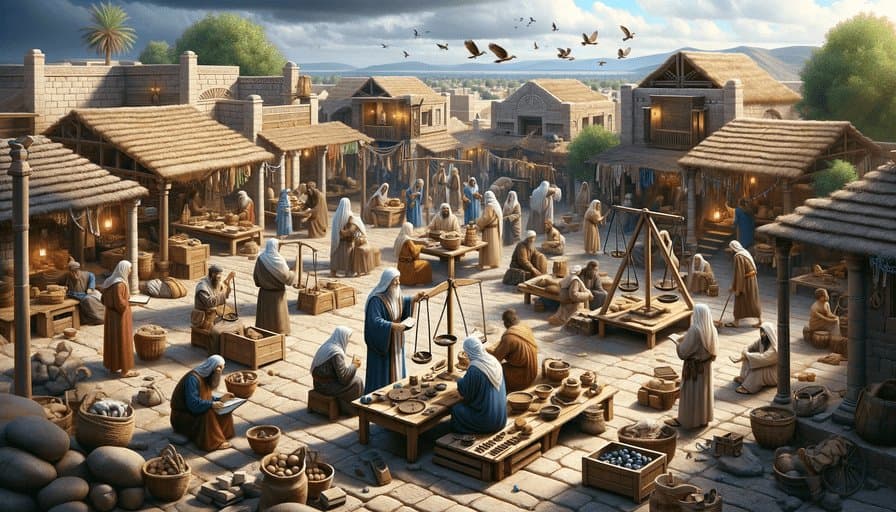
The final laws pair fairness with memory. Even a guilty person receiving lashes may not be given more than the set number, so that punishment never becomes degrading, and an ox threshing grain may not be muzzled from eating as it works. Moshe teaches the law of levirate marriage, by which a childless widow is not abandoned but kept within her late husband's family, and he demands perfectly honest weights and measures in every transaction, for cheating is an abomination to God. The parsha ends with a solemn charge: remember what Amalek did, attacking the weak and weary from behind, and blot out that cruelty from under heaven.