
The Day of Atonement
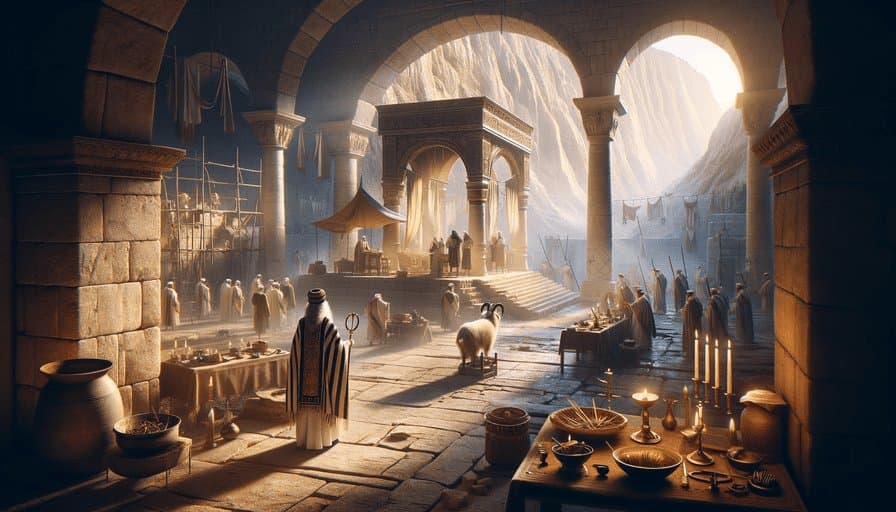
The double portion opens in the aftermath of the death of Aharon's (Aaron's) two sons, as God instructs Moshe (Moses) about when and how the Kohen Gadol (the High Priest) may enter the holiest place. Only once a year, on Yom Kippur (the Day of Atonement), may Aharon come into the innermost chamber, and only with careful preparation, special white garments, and a cloud of incense. The service centers on two goats: one offered to God and one sent into the wilderness to Azazel, symbolically carrying away the sins of the people. Aharon confesses the wrongdoing of the nation and secures atonement for the sanctuary, the priests, and all of Israel. The Torah establishes this as an eternal statute, a yearly day of fasting and repentance.
Blood and Life
The Torah turns to the sanctity of blood and of proper worship. Offerings may be brought only to the entrance of the Mishkan (the Tabernacle), not slaughtered in open fields where people might sacrifice to false gods. Israel is commanded never to consume blood, for the life of a creature is in its blood, and blood is given for atonement upon the altar. One who hunts an animal or bird must pour out its blood and cover it with earth. Through these laws the parsha teaches reverence for life itself and for the God who gives it.
Forbidden Bonds
God warns Israel not to imitate the immoral practices of the land of Egypt, which they have left, or of the land of Canaan, into which they are going. A series of laws defines the boundaries of family and intimacy, forbidding incestuous and other corrupt relationships along with the worship of Molech that consumed children. The Torah stresses that these very acts defiled the previous inhabitants of the land, and that the land itself will not tolerate such corruption. Holiness, the parsha insists, must reach even into the most private corners of life.
You Shall Be Holy
The second half begins with a ringing summons that gives the parsha Kedoshim its name: you shall be holy, for I, God, am holy. What follows is one of the richest collections of commandments in the Torah, binding the love of God to the love of people. Israel is told to revere parents and keep the Sabbath, to leave the corners of the field and the gleanings of the harvest for the poor and the stranger, to deal honestly, pay a worker on time, and never place a stumbling block before the blind. Amid these laws shines the verse at the very heart of the Torah's vision: love your neighbor as yourself. Holiness here is not withdrawal from the world but justice, kindness, and integrity lived within it.
A People Set Apart
The double portion closes by attaching serious consequences to the gravest violations named earlier, showing how deeply the Torah cares about the sanctity of life, family, and worship. God condemns those who give their children to the idol Molech and those who turn to mediums and sorcery, and reaffirms the forbidden relationships already described. Running through the chapter is a repeated call to separation, as Israel is told to distinguish between the pure and the impure and to live differently from the nations around them. The reading ends as it began, with the reminder that Israel is set apart to be holy because God is holy and has drawn this people close to Himself.