
Servants and Freedom
Fresh from the heights of Sinai, the parsha turns straight to law, and strikingly it opens with the Hebrew servant. A man who becomes a servant works for six years and goes free in the seventh, owing nothing, for even in servitude he remains a person with rights and a future. The Torah sets careful protections around both the servant and the maidservant, guarding their dignity and their eventual freedom. That the law code of a newly freed people should begin here is no accident: those who were once slaves must never forget what freedom is worth.
Life and Injury
The parsha then lays out the laws that protect human life and hold people to account for the harm they cause. It treats murder as the gravest of crimes, while carefully distinguishing it from accidental death, and it forbids a person to strike or even curse a parent. It works through case after case of injury between people, an ox that gores, a pit left uncovered, and other everyday dangers, setting fair compensation for the damage done. Running through it all is the principle that each person is answerable for the harm that their actions or their property bring about.
Property and Honesty
Next come the laws of property, theft, and trust between neighbors. One who steals an animal must repay far more than was taken, and there are careful rules for a thief caught breaking in. The Torah defines the duties of those who guard or borrow what belongs to another, deciding who bears the loss when an item is stolen, damaged, or dies. Whether the matter is a borrowed tool or a field scorched by a spreading fire, the goal is honesty and fair restitution between people.
Protecting the Vulnerable
The laws now turn with special force toward those most easily wronged. Again and again the Torah commands not to oppress the stranger, recalling that Israel themselves were strangers in Egypt, and never to mistreat a widow or an orphan. Money lent to the poor is to carry no interest, and a garment taken as a pledge must be returned by nightfall so its owner can sleep. Alongside these come the demands of honest justice: to reject false reports, refuse bribes, never follow a crowd to do wrong, and even help an enemy whose animal has strayed.
Sacred Time
Beyond the courtroom, the parsha marks out the rhythm of sacred time. The land is to be worked for six years and left to rest in the seventh, its produce open to the poor, and every seventh day brings rest for servant, stranger, and animal alike. Three times each year the whole people is to gather before God for the festivals of Pesach (Passover), the harvest, and the ingathering. These laws lift the people's daily justice upward into the service of God, weaving the ethical and the holy into a single way of life.
A Promise for the Road
God then looks ahead to the journey toward the promised land. He pledges to send an angel to guard Israel along the way and to bring them to the place He has prepared, driving out the nations before them. The people are warned to heed this messenger and to serve God alone, tearing down the idols they will encounter, and in return they are promised health, blessing, and secure borders. It is a vision of what faithful living can build once the people arrive in their land.
Sealing the Covenant
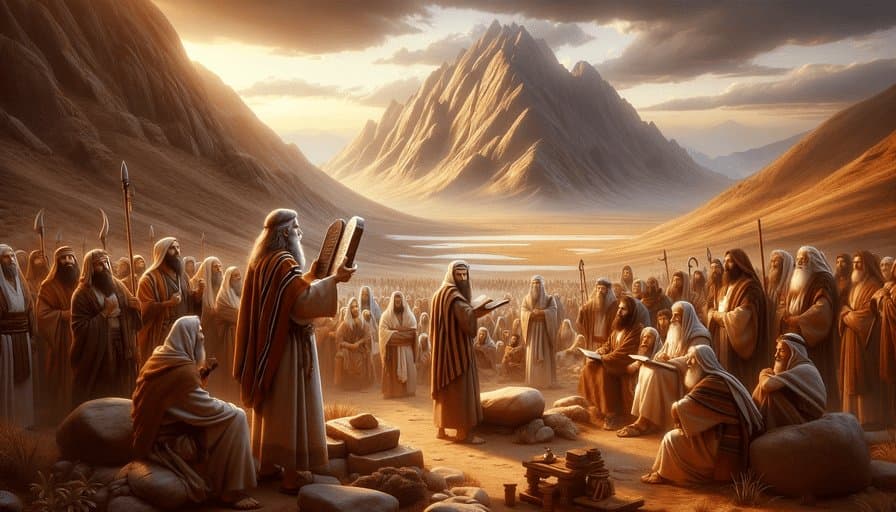
The parsha ends by sealing everything in a solemn ceremony at the foot of the mountain. Moshe tells the people all of God's words and laws, and with one voice they answer that all God has said, they will do and they will hear. He builds an altar with twelve pillars for the tribes, offers sacrifices, and dashes the blood of the covenant upon the people as a bond between them and God. Then Moshe ascends into the cloud upon the mountain, remaining there forty days and forty nights to receive the tablets of stone.