
Yitro's Arrival
The parsha begins as Yitro, the father-in-law of Moshe and a priest of Midian, hears all that God has done in bringing Israel out of Egypt. He travels to meet Moshe in the wilderness, bringing with him Moshe's wife Tzipporah (Zipporah) and their two sons. Moshe goes out to greet him warmly, and the two share the whole story of the Exodus and the wonders at the sea. Overjoyed, Yitro blesses God, declares that God is greater than all other powers, and brings offerings as the elders gather to eat before God.
Wise Counsel
The next day Yitro watches Moshe sit alone from morning until night, judging every dispute the people bring to him. He warns Moshe that this burden will wear out both the leader and the people, and advises him to appoint capable, God-fearing men as judges over thousands, hundreds, fifties, and tens. These judges will handle the ordinary matters, bringing only the hardest cases to Moshe. Moshe listens to his father-in-law and puts the plan into place, a model of shared and lasting leadership, after which Yitro returns to his own land.
At the Mountain
In the third month after leaving Egypt, Israel arrives at the wilderness of Sinai and camps before the mountain. God calls to Moshe and offers the people an extraordinary invitation: if they will keep His covenant, they will be His treasured nation, a kingdom of priests and a holy people. Moshe brings the offer down, and the people answer together that all God has spoken, they will do. God then tells Moshe to ready the nation over three days, washing their garments and setting a boundary around the mountain that no one may cross.
Thunder and Fire
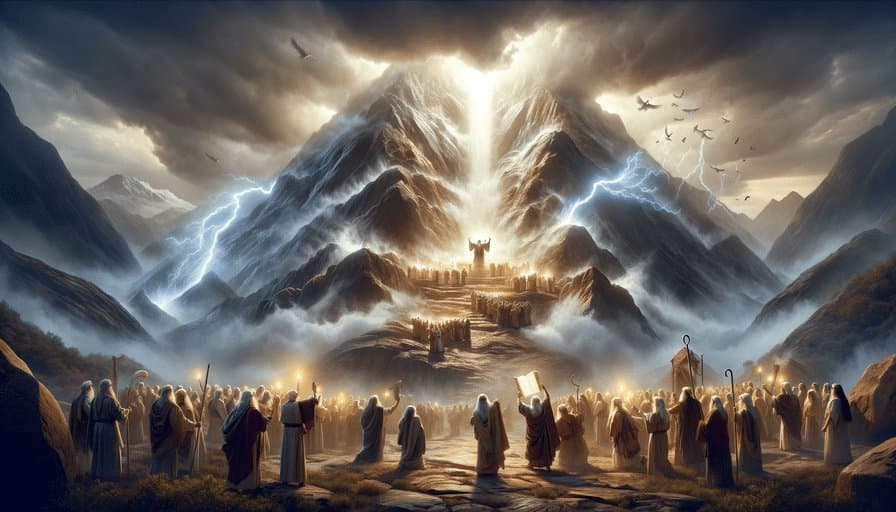
On the third morning the mountain erupts in thunder, lightning, and a heavy cloud, with a long blast of the shofar growing louder and louder. Mount Sinai is wrapped in smoke because God descends upon it in fire, and the whole mountain trembles violently. Moshe leads the awestruck people out of the camp to stand at the foot of the mountain, and God calls Moshe up toward its peak. All Israel waits below as the great moment of revelation arrives.
The Ten Commandments
God then speaks the Ten Commandments directly to the entire people. The first of them turn toward God: to know the God who brought them out of Egypt, to worship no other gods and make no idols, to honor God's name, and to keep Shabbat as a holy day of rest recalling creation. The rest turn toward one another: to honor father and mother, and to refrain from murder, adultery, theft, false testimony, and coveting what belongs to a neighbor. In these ten sayings, duties to God and duties to fellow human beings stand together as a single covenant.
Drawing Near
Overwhelmed by the thunder, the shofar, and the smoking mountain, the people tremble and draw back, begging Moshe to speak with God on their behalf lest they die. Moshe reassures them that this awe is meant to keep them from sin, and then he approaches the thick darkness where God is. There God instructs him that Israel must not fashion gods of silver or gold, but is to serve with a simple altar of earth. The parsha closes with these first directions for worship, a bridge leading from the heights of revelation back into daily life.