
This Is the Blessing
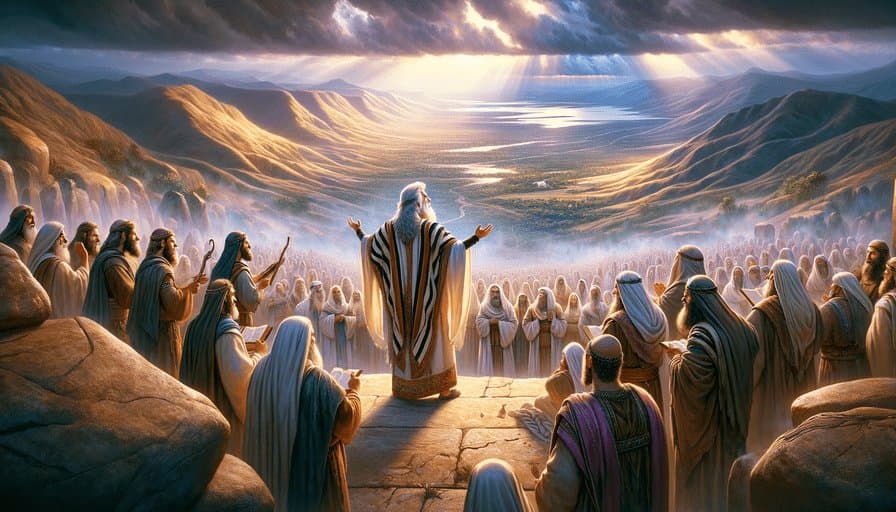
The parsha opens by telling us that this is the blessing with which Moshe, the man of God, blesses the children of Israel just before his death. He begins with a majestic picture of God coming forth from Sinai, shining upon the people and drawing near in holiness. He recalls that Moshe gave Israel the Torah as a cherished inheritance for the whole congregation, and that God became King over a united people. With these words the parting blessings begin, offered as a gift of love from a leader to the nation he has carried.
Blessing the Tribes
Moshe then blesses the tribes of Israel one by one, giving each its own words. He asks life for Reuven (Reuben), and that the voice of Yehuda (Judah) be heard and brought home to his people. He praises Levi for teaching God's law and tending the sacred service, calls Binyamin (Benjamin) the beloved who rests securely at God's side, and pours special abundance on Yosef (Joseph), blessing his land with the choicest gifts of heaven and earth. Zevulun (Zebulun) and Yissachar (Issachar) are blessed in their journeys and their tents, Gad and Dan are likened to lions, Naftali (Naphtali) is filled with God's favor, and Asher is blessed with strength and plenty, dipping his foot in oil. Each tribe receives a blessing suited to its own character and calling.
None Like God
The blessings rise to a triumphant close. Moshe declares that there is none like God, who rides across the heavens to help His people and whose eternal being is their dwelling place, with the everlasting arms beneath them to hold them up. He drives out the foe before them and settles Israel in safety and blessing. Happy are you, Israel, he cries: who is like you, a people delivered and protected by God Himself? It is a soaring note of confidence on which to end a lifetime of leadership.
The View from Nevo
Moshe then climbs from the plains of Moav (Moab) up Mount Nevo, to the summit of Pisgah, across from Jericho. There God shows him the whole of the Promised Land spread out before his eyes, from the Gilad to Dan, across the territories of the northern and southern tribes, and down to the palm city of Jericho and the plain below. This, God tells him, is the land sworn to Avraham (Abraham), Yitzchak (Isaac), and Yaakov (Jacob) for their descendants. God has let Moshe see it with his own eyes, yet he will not cross over to enter it. The moment holds both fulfillment and quiet sorrow.
The Passing of Moshe
There in the land of Moav, Moshe, the servant of God, dies at the age of one hundred and twenty, by the mouth of God, which tradition understands as a passing by a gentle divine kiss. God Himself buries him in the valley, and to this day no one knows the place of his grave. Though he has reached such an age, his eyes are undimmed and his strength unfaded. Israel weeps for him thirty days, and Yehoshua (Joshua), filled with the spirit of wisdom because Moshe had laid his hands upon him, takes up the leadership. The Torah gives Moshe the last word of praise: never again has there arisen in Israel a prophet like him, whom God knew face to face, and who performed before all Israel the mighty signs and wonders that no one has equaled.