
Heaven and Earth, Listen
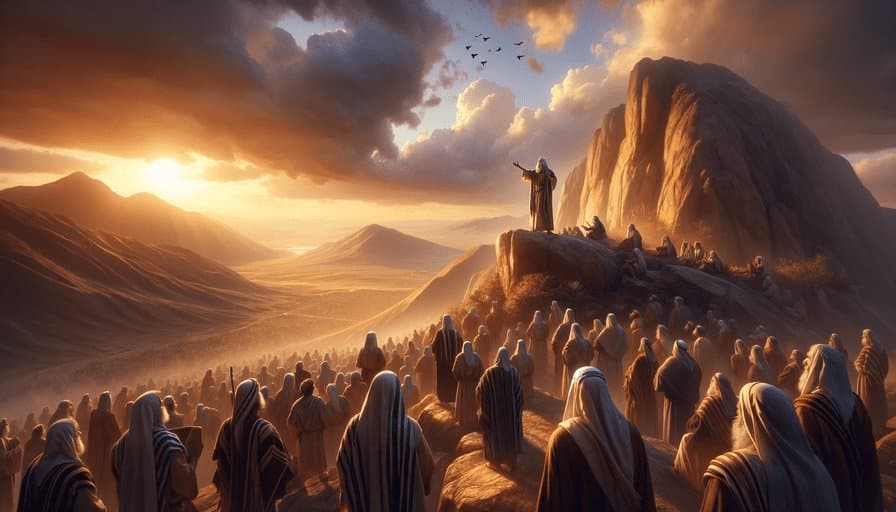
Moshe begins his song by calling on the heavens to give ear and the earth to hear, asking that his words fall like rain and dew upon the people. He proclaims the greatness of God, whom he calls the Rock, whose work is perfect and all of whose ways are just. God is faithful and true, without wrong, righteous and upright. Against that steadfastness Moshe sets the failings of a wayward generation, framing the whole song as a contrast between God's constancy and human forgetfulness.
Remember the Days of Old
The song urges Israel to remember the days of old and to ask the elders, who will tell how God set the nations in their places and held Israel especially dear. In a tender image, Moshe describes how God found His people in a howling wilderness and encircled them with care, guarding them like the pupil of His own eye. Like an eagle rousing its nest and hovering over its young, spreading its wings to catch them, God bore Israel aloft and led them alone, with no foreign power beside Him. He brought them to a rich land and fed them with its finest gifts. The passage is a portrait of pure, attentive love.
Yeshurun Grew Fat
Then the song turns to ingratitude. Yeshurun (a poetic name for Israel) grows fat and well fed, and in his comfort kicks against the very God who made him, forsaking the Rock of his salvation. The people chase after strange gods and empty idols that are no gods at all, stirring God to anger and sorrow. In response, God speaks of hiding His face to see what their end will be, letting the consequences of abandoning Him unfold. The warning is sharp, yet it flows from a wounded love rather than cold rejection.
I Am He
God declares that vengeance and justice are His alone, and that He will act when the strength of His people is gone and they stand utterly helpless. Yet the same God who judges also relents: He will have compassion on His servants and vindicate them, refusing to let their enemies claim the victory as their own. In the song's climax God proclaims that He alone is God, with no other beside Him, the One who brings death and life, who wounds and heals, and from whose hand none can deliver. At the last He promises to avenge and to atone, cleansing His land and His people. The nations themselves are called to rejoice together with Israel.
This Is Your Life
With the song complete, Moshe comes and recites all its words in the hearing of the people, together with Yehoshua (Joshua). He urges them to set their hearts on everything he has testified that day and to command it to their children. These are not empty words, he tells them, but their very life, and through them they will lengthen their days on the land they are about to inherit. The song is meant to live not on a scroll alone but in the heart of every generation.
Ascend the Mountain
On that very day God speaks to Moshe and tells him to climb Mount Nevo, in the land of Moav (Moab) across from Jericho, and to look out over the land of Canaan that Israel is about to receive. There Moshe is to die and be gathered to his people, as his brother Aharon (Aaron) died on Mount Hor before him. God recalls that this is because, at the waters of Meribah in the wilderness, the two of them did not sanctify Him fully before the people. Moshe will see the land spread out before him, but he will not cross into it. The parsha ends poised on that mountain, between a life of leadership and a death within sight of the promise.