
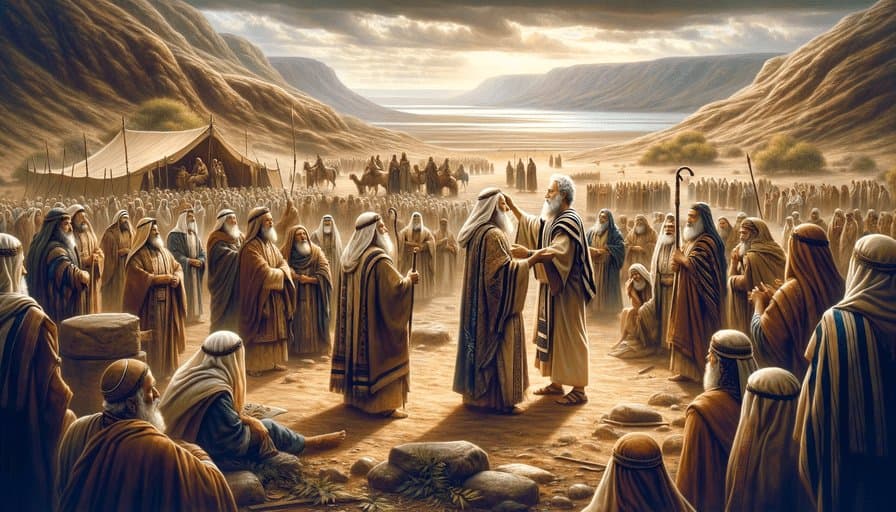
One Hundred and Twenty Years
Moshe goes out and speaks to all Israel, telling them that he is now one hundred and twenty years old and can no longer come and go at their head. God has told him plainly that he will not cross the Jordan. Rather than let the people despair, Moshe lifts their spirits: God Himself will cross over before them and clear the way, and Yehoshua will lead them in. He urges the whole nation to be strong and courageous and not to fear, for God will neither fail them nor forsake them.
Strengthening Yehoshua
Moshe then calls Yehoshua forward in the sight of all Israel and speaks to him directly. Be strong and courageous, he tells him, for you are the one who will bring this people into the land God promised their ancestors, and you will settle them in it. The reassurance is the same one Moshe gave the nation: God is the One who goes before you, and He will be with you and never leave you. In front of everyone, the future of Israel is placed on Yehoshua's shoulders with confidence and blessing.
The Torah and Hakhel
Moshe writes this Torah down and hands it to the priests who carry the Ark and to the elders of Israel. He commands that every seven years, in the sabbatical year during the festival of Sukkot, the entire people be gathered, men, women, children, and the strangers among them, to hear the Torah read aloud. The purpose is that they, and especially the children who have never known it, should learn to revere God and keep His words. This recurring assembly, later called Hakhel, keeps the whole nation forever learning together.
A Song as Witness
God tells Moshe that his death is near and summons him, together with Yehoshua, to the Tent of Meeting, where God appears in a pillar of cloud. He foretells with sorrow that the people will one day abandon Him and chase after foreign gods, breaking the covenant, and that troubles will overtake them as a result. To meet that day, God commands Moshe to write down a particular song and teach it to Israel, so that it will remain on their lips as a witness when they need to remember their way back. God again charges Yehoshua to be strong and courageous, for he will bring Israel into the land.
Beside the Ark
When Moshe finishes writing the words of the Torah in a scroll, he instructs the Levites to place it beside the Ark of the Covenant, where it will stand as a witness to the people. Knowing in his heart that they may rebel after he is gone, he wants the teaching preserved and kept close. He then summons the elders and officers of all the tribes to assemble and hear the song he is about to speak. Calling heaven and earth to witness, Moshe prepares to speak the words of his great song, which fill next week's parsha, Ha'azinu.