
The Half Shekel
God gives Moshe a series of final instructions before the Sanctuary can be built. Every person counted in a census is to give a half shekel, rich and poor giving exactly the same, as a reminder that each soul counts equally before God. God also commands a copper washstand where the priests will purify their hands and feet, a special oil for anointing the Sanctuary and its vessels, and a fragrant incense reserved for sacred use. Finally God names the master craftsmen, Betzalel (Bezalel) of the tribe of Judah and Oholiav (Oholiab) of the tribe of Dan, filling them with wisdom and skill to carry out all the holy work.
Shabbat and the Tablets
Before Moshe descends, God sets Shabbat as an eternal sign of the bond between God and Israel, teaching that even the sacred labor of building the Sanctuary must pause for the seventh day. Rest, not construction, is the truest testimony that God is the Creator. God then gives Moshe the two tablets of stone, inscribed by the finger of God, and Moshe prepares to return to the people. The stage is set for the covenant to be carried down the mountain.
The Golden Calf
Down below, the people grow anxious when Moshe does not return when they expect him. They gather around Aharon (Aaron) and demand a tangible god to lead them, and Aharon collects their gold and fashions it into a calf. The people declare it their god and celebrate before it with offerings and revelry. In a single reckless moment, the nation that stood at Sinai turns from the God who freed them.
The Shattered Tablets
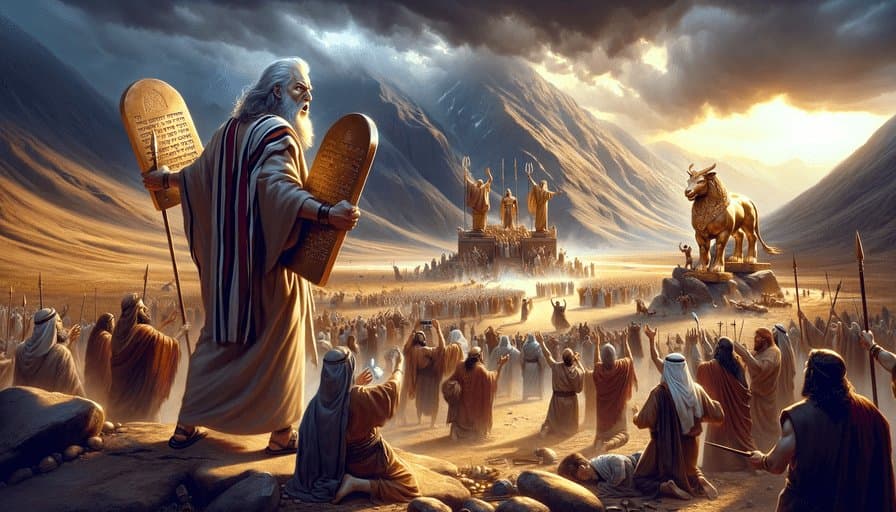
God tells Moshe what is happening below and threatens to destroy the people, but Moshe pleads on their behalf, invoking God's promises to the patriarchs. Descending the mountain and seeing the calf and the dancing with his own eyes, Moshe throws down the tablets and they shatter at the foot of the mountain. He grinds the calf to powder, confronts Aharon, and calls out for those loyal to God; the Levites rally to him and a heavy reckoning falls upon the camp. Moshe then climbs back up to seek forgiveness, offering his own life for the people rather than let them be blotted out.
Seeking God's Presence
In the aftermath, God says an angel will lead Israel onward, but that He Himself will not go up among so stubborn a people, and the nation mourns. Moshe pitches a tent outside the camp where he speaks with God face to face, as a person speaks with a friend, and refuses to move forward unless God's own presence goes with them. Emboldened, Moshe asks to behold God's glory. God answers that no human being can see His face and live, yet promises to let His goodness pass by while sheltering Moshe in the cleft of a rock.
The Second Tablets
Moshe carves two new tablets and ascends the mountain once more. There God passes before him and proclaims the Thirteen Attributes of Mercy, revealing Himself as compassionate and gracious, slow to anger, and abounding in kindness and truth. Moved, Moshe bows low and begs God to forgive the people and take them back as His own, and God renews the covenant and restates its central commands. Moshe remains on the mountain forty days, and when he descends with the tablets his face shines with rays of light, so that he wears a veil among the people whenever he is not speaking with God.