
The Weight of a Vow
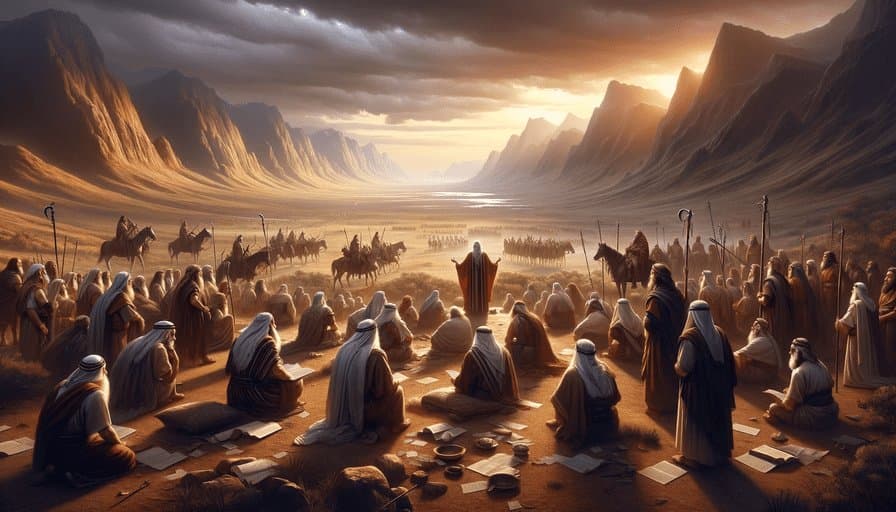
Moshe (Moses) teaches the heads of the tribes the laws of vows, beginning with the principle that one who makes a vow or an oath must not break his word but must fulfill everything he has said. The Torah then details the limited cases in which a vow may be annulled: a father may nullify the vows of his young daughter, and a husband those of his wife, if he does so on the day he hears them. Left unchallenged, the words stand and bind. In this way the portion opens by underscoring how seriously the Torah treats human speech and the promises we make.
War with Midian
God tells Moshe that before he dies he must carry out Israel's vengeance against Midian for the seduction at Peor that led so many astray. A thousand men are drafted from each tribe, twelve thousand in all, sent to battle alongside Pinchas (Phinehas) and the sacred vessels. They defeat Midian, striking down its kings, and among the slain is Bilam (Balaam), the prophet whose counsel had ensnared Israel in sin. The warriors return with captives, livestock, and a great store of plunder.
Dividing the Spoils
Moshe grows angry that the soldiers have spared the very women whose schemes brought about the plague, and he issues instructions to purify both the warriors and their metal spoils through fire and water. The vast plunder is then divided evenly between those who fought and the rest of the community, with a portion set aside as a tribute to God and a gift to the Levites. Remarkably, the officers report that not a single soldier has been lost in the campaign. In gratitude they bring the gold they captured as an offering, a memorial before God for the lives that were spared.
A Request to Settle
The tribes of Reuven (Reuben) and Gad, who own vast herds of cattle, notice that the newly conquered lands east of the Jordan are ideal for grazing. They come to Moshe and ask to receive their inheritance there rather than crossing the river into the Land itself. Moshe reacts sharply, fearing they intend to shirk the coming war and discourage their brothers, just as the spies once broke the nation's resolve a generation earlier. He warns that abandoning the people now could bring ruin upon them all.
A Pledge to Cross Over
The two tribes clarify that they have no wish to avoid the fight. They pledge to build sheepfolds and cities for their families, then send their armed men across the Jordan as the vanguard of the conquest, promising not to return home until every tribe has received its portion. Reassured, Moshe grants their request on this condition and warns that failure to keep it would be a sin against God. The lands of Gilad and Bashan are assigned to Reuven, Gad, and half the tribe of Menashe (Manasseh), whose families settle and rebuild the cities of the region.