
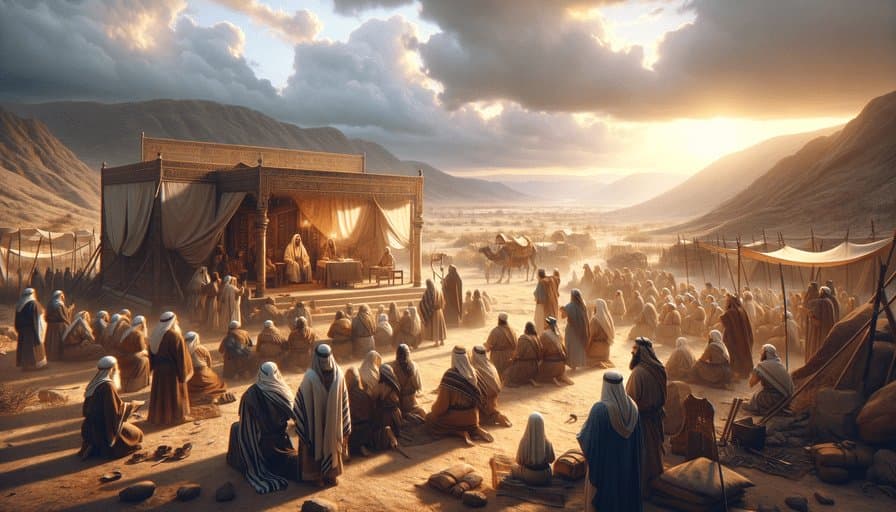
Pinchas's Reward
In reward for the courage that turned back God's wrath at Peor, God grants Pinchas (Phinehas) son of Elazar (Eleazar) a covenant of peace and an everlasting covenant of priesthood for him and his descendants. His single act of zeal, taken when the leaders stood paralyzed, has secured atonement for the people and halted the deadly plague. God then commands Moshe (Moses) to treat the Midianites as enemies, for it was their scheme at Peor that lured Israel into sin and corruption. The reckoning with Midian is set in motion, though it will be carried out only later.
Counting a New Generation
God commands a new census of all Israelite men of military age, family by family and tribe by tribe. Nearly forty years have passed since the last count, and this generation is the one that will actually enter and inherit the Land, for the generation of the Exodus has died out in the wilderness as decreed. The Torah records that the Land is to be apportioned by lot, with larger tribes receiving larger shares and smaller tribes less. The tribe of Levi is counted separately, set apart for service and given no territorial inheritance of its own.
The Daughters of Tzelophchad
Five sisters, the daughters of Tzelophchad (Zelophehad), come forward with a bold and respectful appeal. Their father has died leaving no sons, and they ask why his name and portion should vanish simply because he had only daughters. Moshe brings their case before God, who declares that their claim is just: in the absence of sons, daughters inherit their father's estate. Their courage yields a lasting law of inheritance and reveals a deep love for a share in the Promised Land.
A Leader for the People
God tells Moshe to ascend a mountain and look out over the Land he will not be permitted to enter, a quiet echo of the waters of strife years before. Rather than dwell on his own loss, Moshe's first concern is that the people not be left like a flock without a shepherd, and he asks God to appoint a worthy leader. God chooses Yehoshua (Joshua) son of Nun, a man in whom is the spirit, and instructs Moshe to lay his hands upon him before Elazar and the whole assembly. In this public act of ordination, Moshe transmits a measure of his own radiance and authority, ensuring a smooth succession for the nation.
The Sacred Calendar
The portion turns from leadership to worship, laying out the schedule of communal offerings brought in God's name throughout the year. It begins with the daily tamid offering of every morning and afternoon, then adds the additional offerings for Shabbat and for Rosh Chodesh, the new month. From there it moves through the festivals in turn: Pesach and the seven days of matzot, the first fruits of Shavuot, the day of the shofar blast, the fast of Yom Kippur, and the seven days of Sukkot with the concluding festival of Shemini Atzeret. Together these offerings give the year its sacred rhythm, binding the people to God through the seasons long after they settle the Land.